Vaccinations
Autumn/Winter Flu and COVID Vaccination Programme 2026 - Updated September 30th 2026
Barcellos Family Practice’s annual autumn and winter flu and COVID-19 vaccination programme is starting soon.
We have secured and allocated vaccine doses specifically for our eligible registered patients. Getting your vaccination directly at your GP surgery helps us support your ongoing care.
Dedicated Vaccination Clinic dates:
- Under 65’s: 1st October
- Over 65’s: 8th October
- Over 65’s: 15th October
Eligible patients should call 01202 897989 or 01202 874302 to book an appointment.
Flu Vaccine Eligibility
You are eligible for a free NHS flu vaccine if you meet any of the following criteria:
- Aged 65 or over (including those who will reach age 65 by 31 March 2026)
- Aged 18 to 64 years with an underlying health condition that puts you at risk (as defined by NHS criteria)
- Pregnant
- Living with someone who has a weakened immune system or is at higher risk of severe infection
- Carers, including those who receive Carer’s Allowance or are the main carer for an older or disabled person
- Frontline health and social care workers who cannot access a vaccine through an occupational health scheme at work.
COVID-19 Vaccine Eligibility
In line with advice from the Joint Committee on Vaccination and Immunisation (JCVI), you are eligible for the autumn 2026 COVID-19 booster if you are:
- Aged 75 years and over
- A resident in a care home for older adults
- Aged 6 months and over with a weakened immune system (immunosuppressed, as defined in the UK Health Security Agency)
COVID-19 vaccination
The COVID-19 vaccine helps protect against COVID-19 virus, which can be a serious or life-threatening illness.
Getting the COVID vaccine can help reduce your risk of getting severe symptoms and help you recover more quickly if you catch COVID. It protects against different types of the COVID virus and can help reduce your risk of being hospitalised if you become infected.
Learn more about the COVID-19 vaccination on the NHS website.
Winter flu (influenza) vaccination
Influenza (flu) vaccination is important because, while flu is unpleasant for most people, it can be dangerous and even life-threatening for some, particularly those with certain health conditions. Getting vaccinated helps protect individuals from flu and relieves the pressure on the NHS and social care services.
Read more information on the flu vaccination on the NHS website.
Stay Protected, Stay Healthy!
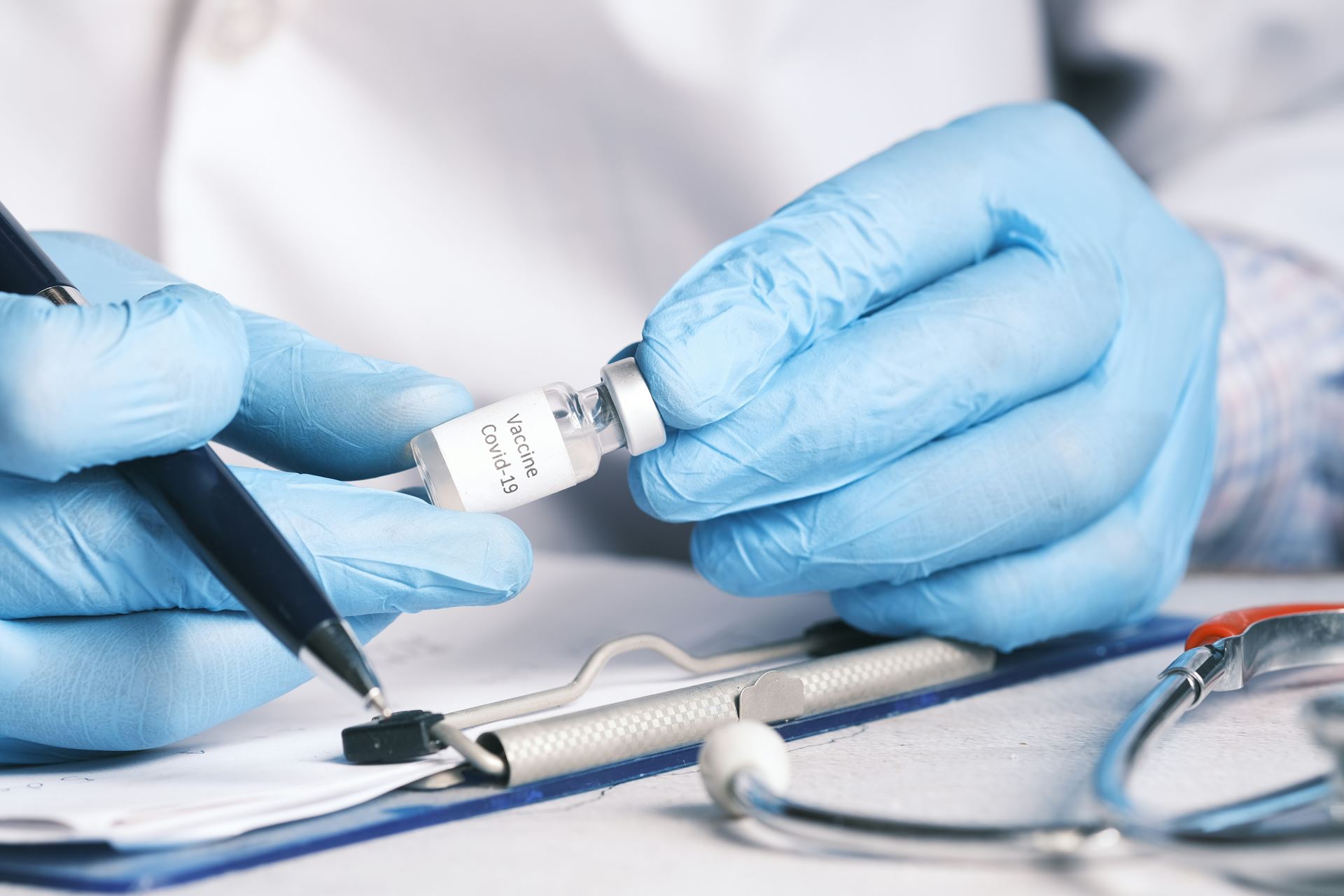
Vaccines are one of the safest and most effective ways to protect yourself, your family, and your community from serious diseases.
Why Vaccinate?
- To prevent serious illnesses like flu, measles, and pneumonia
- To protect those who are more vulnerable, like babies and the elderly
- To reduce the spread of infections in the community
- To keep yourself and your loved ones safe and healthy
Who Should Get Vaccinated?
Vaccines help at every stage of life.
Scroll down to find out more about the free NHS vaccines that the Practice offers for babies, children, and adults.
MenB Vaccines
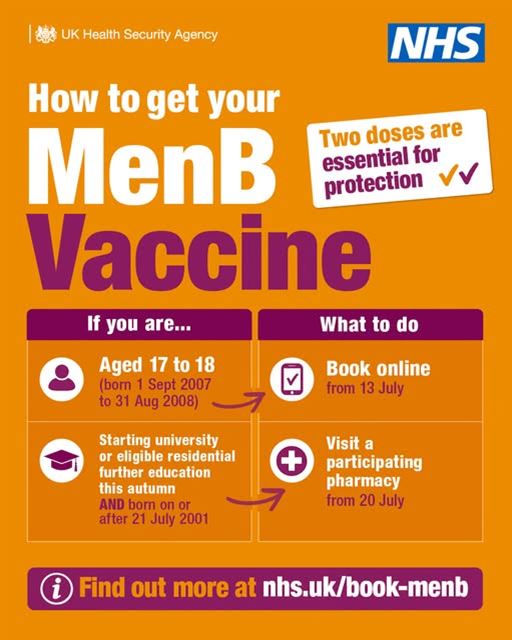
While eligible 17–18-year-olds and first-year residential students under 25 can now receive a free NHS MenB vaccination, please note that these vaccinations are not provided by GP surgeries.
If you are registered with a GP, you can book an appointment online at a high street pharmacy via the National Booking System. Walk-in pharmacy services.
Find out more and how to book on the NHS website here.
The MenB vaccine helps protect against meningococcal group B bacteria. These bacteria can cause severe and life-threatening illnesses, including meningitis (an infection of the protective membranes around the brain and spinal cord) and sepsis (blood poisoning).
Meningococcal infection can progress very quickly. Getting vaccinated is the most effective way to protect yourself from severe illness, permanent disability, or life-threatening complications.
Meny ACWY vaccination
Meningococcal disease (meningitis and septicaemia) is a rare but life-threatening disease caused by meningococcal bacteria.
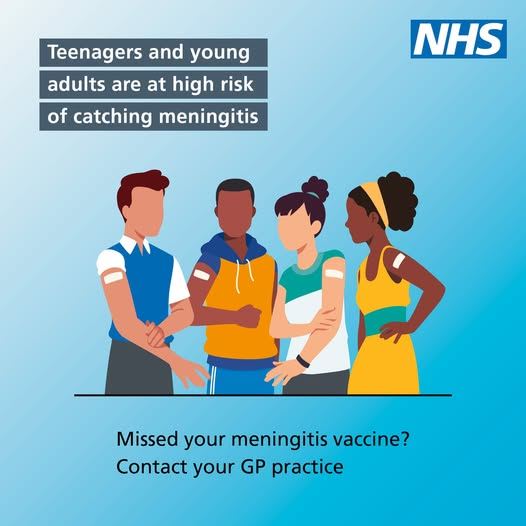
Older teenagers and new university students are at higher risk of infection because many of them mix closely with lots of new people, some of whom may unknowingly carry the meningococcal bacteria at the back of their nose and throat.
"Fresher" students going to university for the first time should make sure they've had the MenACWY vaccine to prevent meningitis and septicaemia, which can be deadly.
The MenACWY vaccine is usually given to children at age 13 or 14 (school year 9).
If you missed getting the vaccine when you were at school, you can still get it up to age 25.
For more information, visit the MenACWY vaccine overview page on the NHS website.
Contact us to book an appointment
Shingles vaccinations
The shingles vaccine helps protect you from shingles—a common and often painful skin condition that can lead to long-term nerve pain.
How the Vaccine is Given
Unlike older versions of the vaccine, the current NHS vaccine (Shingrix) is given as 2 separate injections in your upper arm:
- Most adults: 2 doses given 6 to 12 months apart.
- Severely weakened immune system: 2 doses given 8 weeks to 6 months apart.
Who is Eligible?
You are eligible for the free NHS shingles vaccine if you meet any of the following criteria:
- Aged 70 to 79 (you remain eligible up until your 80th birthday).
- Turned 65 on or after 1 September 2023.
- Aged 18 or over with a severely weakened immune system.
Note: If you turned 65 before 1 September 2023, you will become eligible when you turn 70 as part of the NHS phased rollout.
How to Get Your Vaccine
- We will contact you: In most cases, you do not need to call us. We will invite you when you become eligible.
- If you missed your invite: If you think you were previously eligible and missed your appointment, please contact our reception team to book your vaccination.
Useful Links
-
Check full eligibility details on the NHS Shingles Vaccine overview page.
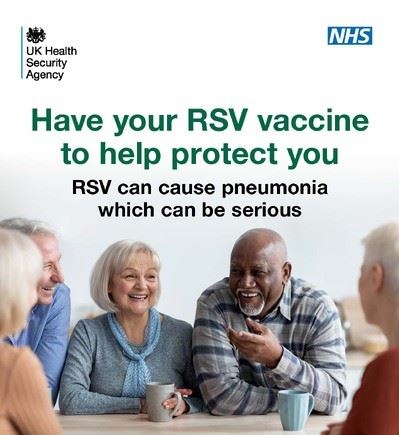
Respiratory Syncytial Virus (RSV) Vaccinations
Who is Eligible?
You are eligible for the free NHS RSV vaccine if you fall into any of the following groups:
- Adults aged 75 and over: You become eligible on your 75th birthday.
- Residents in care homes for older adults: Eligible regardless of age.
- Pregnant women: You are eligible during every pregnancy once you reach 28 weeks. Having the vaccine while pregnant passes antibodies to your baby, protecting them during their first few months of life when they are most vulnerable.
How to Get Your Vaccine
- If you are pregnant: Speak to your midwife at your 28-week antenatal appointment, or contact our reception team to book an appointment with our practice nurse.
- If you are aged 75 or over: We will contact you by text message, letter, or phone call when you are due. If you think you were missed or have recently turned 75, please get in touch with reception to book.
Useful Links
MMRV (measles, mumps, rubella and chickenpox) vaccine
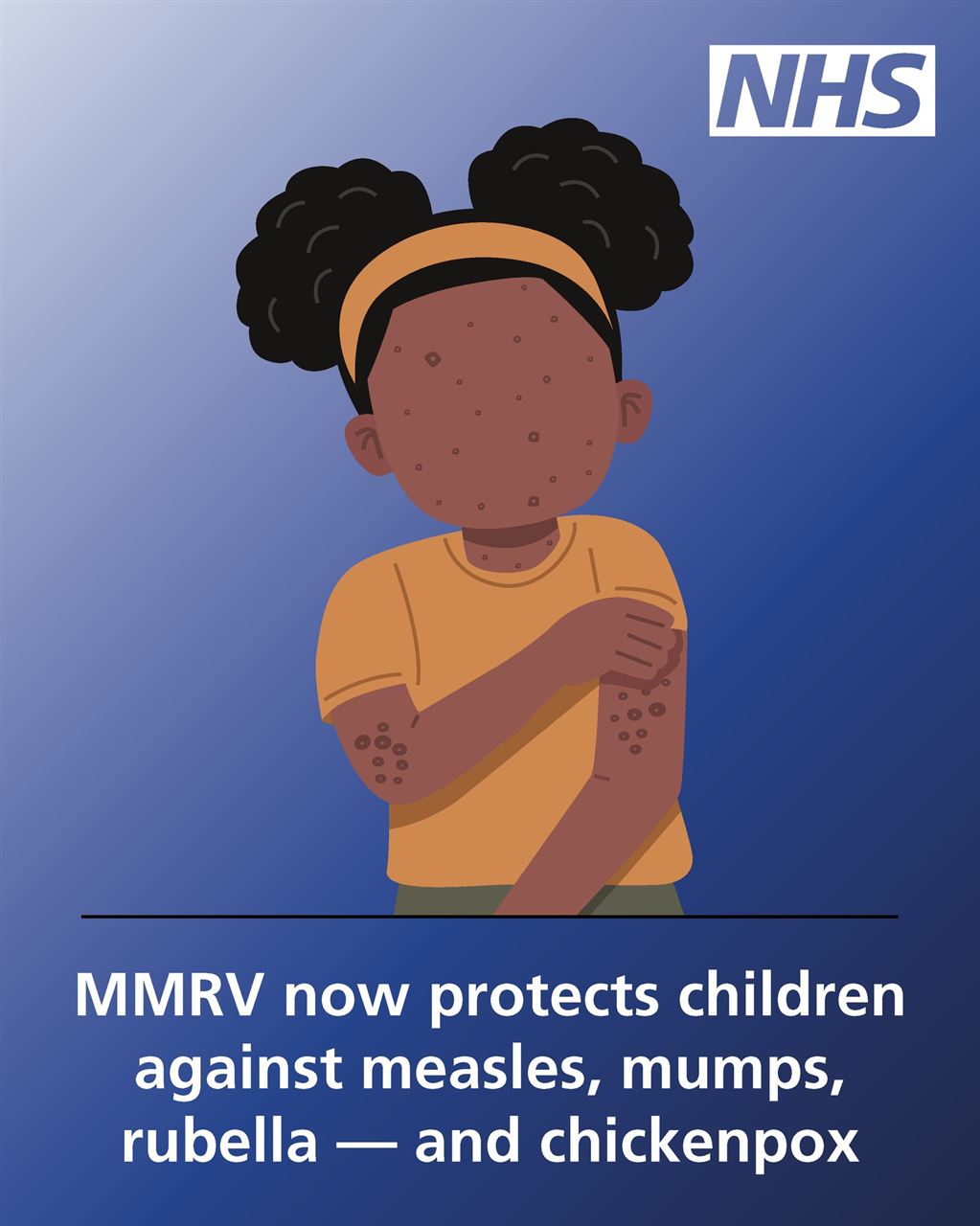
The MMRV vaccine is a safe and effective combined vaccine that replaced the MMR vaccine in the routine schedule on 1 January 2026. It protects your child against four serious illnesses in fewer injections:
These conditions are highly infectious and can spread easily between unvaccinated people.
Why the change?
The addition of the chickenpox component (Varicella) helps prevent this common, easily spread infection in children. It is usually mild, but it can lead to serious complications which need hospitalisation, including chest infections and fits.
By using the combined MMRV vaccine, the NHS has also moved the second dose earlier (from 3 years 4 months to 18 months) to ensure children are fully protected before they start nursery or pre-school.
The Vaccination Schedule
Two doses of the vaccine are required for lifelong protection. There is currently no medical treatment for measles, so vaccination is the only way to prevent becoming seriously unwell.
The MMR vaccine is still available for older children and adults born on or before 31 December 2019 who were not vaccinated against measles, mumps and rubella when they were younger.
Visit the NHS website for more information about the MMRV vaccine.
Pneumonia vaccination
The pneumococcal vaccine protects against serious and potentially fatal pneumococcal infections. It’s also known as the pneumonia vaccine.
Pneumococcal infections are caused by the bacterium Streptococcus pneumoniae and can lead to pneumonia, septicaemia (a kind of blood poisoning) and meningitis.
A pneumococcal infection can affect anyone. But some people are at higher risk of serious illness, so it’s recommended they’re given the pneumococcal vaccination on the NHS.
These include:
- babies
- adults aged 65 or over
- children and adults who are at risk of pneumococcal infection, such as those with a serious heart or kidney infection including those with severe autoimmunity
This vaccine is not given annually like the flu jab. Usually you only need a single pneumococcal vaccination. If you have a long-term health condition you may only need a single, one-off pneumococcal vaccination, or a vaccination every 5 years, depending on your underlying health problem.
If you or a family member is in this group, please contact us to check eligibility.
For more information about the Pneumonia vaccine please visit the NHS website.
Travel Vaccinations
Foreign travel may expose patients to certain infections. So, If you're planning to travel outside the UK, find out what vaccinations you might need on our Travel Health page.
Childhood Immunisation
Childhood immunisation is an important aspect of your child's healthcare. For information on routine childhood immunisation, please visit our Children's Health page.
Other Vaccinations Offered by the NHS
This guide can help you understand the vaccines offered in the UK and when to have them. It also explains how they work and why they’re safe and important. Follow this link for more information about vaccinations from NHS UK.
If you have any questions or concerns regarding vaccinations, please contact us.
Page created: 14 October 2026